
My grandmother used to say that real love tastes like butter and sugar. Every February, she’d make these Valentine’s Shortbread Hearts, and the whole house would smell like a bakery wrapped in a warm hug.
Valentine’s Shortbread Hearts are classic buttery cookies that literally melt in your mouth. The traditional Scottish shortbread formula uses just butter, flour, and sugar to create rich, crumbly cookies with tender texture. Cut into heart shapes and decorated with chocolate or glaze, they become the perfect edible Valentine’s message.
The key to perfect Valentine’s Shortbread Hearts lies in two critical steps: chilling the dough before cutting, and chilling again before baking. This double-chill method prevents spreading in the oven and keeps those heart shapes crisp and defined. The result is professional-looking cookies that taste better than any bakery version.
What Makes These Special
Traditional shortbread contains no eggs or leavening agents. This creates a completely different texture than typical cookies—denser, more crumbly, with a sandy melt-in-your-mouth quality that distinguishes true shortbread from sugar cookies.
The high butter content in Valentine’s Shortbread Hearts provides that signature rich flavor and tender crumb. Using real butter is non-negotiable—margarine or shortening changes the chemistry and produces an inferior texture that spreads excessively during baking.
These cookies stay fresh for up to two weeks in an airtight container, making them ideal for advance preparation or gift-giving. The flavor actually improves after a day or two as the butter mellows and the texture becomes even more tender.
Essential Ingredients
Simple ingredients create extraordinary results in classic shortbread.
Shortbread Base
- 2 cups all-purpose flour – provides structure without toughness
- 1 cup unsalted butter, room temperature – must be soft enough to cream but not melted
- 1/2 cup powdered sugar – dissolves more smoothly than granulated for finer texture
- 1/4 teaspoon salt – enhances butter flavor
- 1 teaspoon vanilla extract – adds depth without overpowering butter taste
- 1/2 teaspoon almond extract (optional) – traditional addition that complements butter beautifully
Decoration Options
- 4 ounces chocolate (milk, dark, or white) – for dipping or drizzling
- Valentine’s sprinkles – pink, red, and white varieties
- Edible shimmer dust – adds elegant sparkle
- Royal icing or glaze – for detailed decorating
- Raspberry or strawberry jam – for sandwich-style cookies
- Coarse sugar – for simple sparkle before baking
Room temperature butter is crucial for proper creaming. Cold butter won’t incorporate air properly, while melted butter changes the cookie texture entirely. Leave butter on the counter for 30-60 minutes before starting.
European-style butter with higher butterfat content (82% versus standard 80%) creates even richer, more tender Valentine’s Shortbread Hearts. The extra fat makes them more luxurious without requiring recipe changes.
Making the Dough
Beat softened butter and powdered sugar together with an electric mixer on medium speed for 3-4 minutes until light, fluffy, and nearly white. This creaming process incorporates air that creates the characteristic sandy texture of shortbread.
Add vanilla extract and almond extract if using, then beat for 30 seconds more to distribute evenly. The extracts should be fully incorporated without overmixing at this stage.
Add flour and salt all at once. Mix on low speed just until the mixture looks like coarse crumbs and starts clumping together. This takes only 30-60 seconds. Overmixing develops gluten and creates tough cookies instead of tender ones.
Turn the crumbly mixture onto a work surface and knead gently with your hands 5-6 times until it comes together into a smooth dough. The warmth from your hands helps bind the butter and flour. If the dough seems too crumbly, add one teaspoon of cold water and knead again.
Chilling and Rolling
Shape the dough into a flat disk about 1 inch thick. Wrap tightly in plastic wrap and refrigerate for at least 30 minutes or up to 3 days. This first chill firms the butter and relaxes the gluten for easier rolling.
Line two baking sheets with parchment paper before rolling. Set these aside so cut cookies can go directly onto the prepared sheets without extra handling that might distort their shape.
Lightly flour your work surface and rolling pin. Remove dough from refrigerator and let stand for 5 minutes if very hard. Roll to 1/4 to 1/2 inch thickness, working quickly to prevent the dough from becoming too warm.
Thinner cookies (1/4 inch) are more delicate and crisp. Thicker cookies (1/2 inch) have more tender centers with slight crunch on edges. Both work beautifully for Valentine’s Shortbread Hearts—choose based on personal preference.
Cutting and Second Chill
Dip a heart-shaped cookie cutter in flour before each cut to prevent sticking. Press straight down through the dough firmly, then lift straight up without twisting. Twisting seals the edges and prevents proper rise during baking.
Transfer cut hearts to prepared baking sheets using a thin spatula, spacing them 1 inch apart. They don’t spread much, but need slight room for air circulation. Gather scraps, knead gently to bring together, and re-roll once for additional cookies.
Place the entire baking sheet in the refrigerator for 30 minutes before baking. This second chill is the secret to perfectly shaped Valentine’s Shortbread Hearts. Cold butter solidifies and holds the shape during the first minutes in the oven.
While cookies chill, preheat your oven to 325°F. Shortbread bakes at lower temperature than typical cookies to prevent excessive browning before the centers cook through. The gentle heat creates even baking and maintains pale golden color.
Baking Instructions
Bake chilled Valentine’s Shortbread Hearts for 12-15 minutes until the edges just barely turn light golden. The tops should remain pale—they’ll look almost unbaked but will firm up as they cool.
Thinner cookies (1/4 inch) need 10-12 minutes. Thicker cookies (1/2 inch) require 14-16 minutes. Watch carefully during the final minutes as shortbread goes from perfect to overbaked quickly.
Remove from oven when cookies look set but still soft. They’ll feel tender and fragile straight from the oven. Let cool on the baking sheet for 5 minutes, during which time they’ll firm considerably.
Transfer carefully to a wire cooling rack using a thin spatula. Let cool completely before decorating—warm cookies will melt chocolate instantly and make decorating messy and difficult.
Chocolate Decoration
Melt chocolate in a microwave-safe bowl in 30-second intervals, stirring between each, until smooth and completely melted. Overheating chocolate causes it to seize and become grainy.
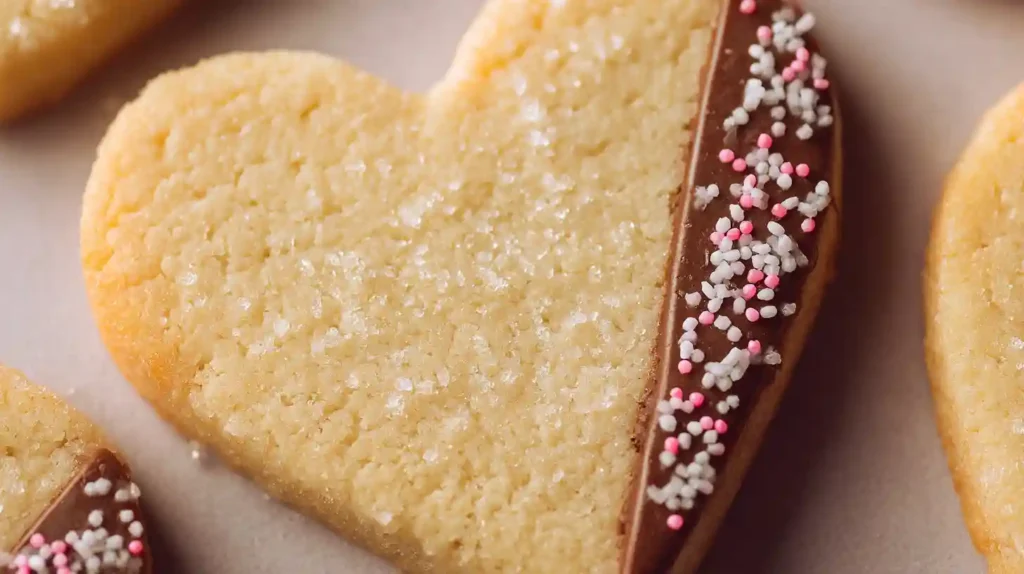
For half-dipped hearts, hold each cookie by the pointed bottom and dip the top rounded portion into melted chocolate. Let excess drip off for a few seconds, then place on parchment paper.
Immediately sprinkle dipped chocolate with Valentine’s sprinkles, nonpareils, or edible shimmer dust before the chocolate sets. Work quickly—chocolate hardens in 2-3 minutes at room temperature.
For drizzled chocolate, transfer melted chocolate to a piping bag or small zip-top bag with a tiny corner snipped off. Drizzle in zigzag patterns across cooled cookies for elegant decoration that uses less chocolate.
Alternative Decorations
Create stunning Valentine’s Shortbread Hearts with various decoration techniques.
- Royal icing flood – thin icing that dries smooth and glossy, perfect for detailed piping
- Colored glaze – powdered sugar mixed with milk and food coloring for pastel finishes
- Jam sandwich – spread raspberry or strawberry jam between two heart cookies
- Pre-bake sugar – sprinkle coarse sugar on unbaked cookies for simple sparkle
- Lemon glaze – powdered sugar and lemon juice for tangy contrast to buttery shortbread
- Gold leaf – tiny pieces of edible gold for ultra-elegant presentation
- Piped borders – use small round tip to pipe decorative edges in contrasting colors
Storage and Gifting
Store Valentine’s Shortbread Hearts in an airtight container at room temperature for up to 2 weeks. Place parchment paper between layers to prevent sticking if decorated with chocolate or icing.
Keep undecorated shortbread separate from strong-smelling foods as butter absorbs flavors and odors easily. Store in a cool, dry place away from heat sources that might soften the butter.
For gifting, arrange cookies in clear cellophane bags tied with red ribbon. Pack in small boxes lined with tissue paper for more formal presentation. Include storage instructions with gifts.
Freeze baked undecorated shortbread for up to 3 months. Wrap tightly in plastic wrap, then place in freezer bags. Thaw at room temperature for 2 hours before decorating and serving.
Recipe Variations
Transform basic shortbread into exciting flavor variations.
- Chocolate shortbread – replace 1/4 cup flour with cocoa powder for rich chocolate hearts
- Lemon hearts – add 2 teaspoons lemon zest to dough and glaze with lemon icing
- Raspberry almond – add 1/4 cup finely ground almonds and increase almond extract
- Brown butter – brown the butter before creaming for nutty, caramel notes
- Cardamom spice – add 1/2 teaspoon ground cardamom for aromatic warmth
- Orange chocolate – add orange zest to dough and dip in dark chocolate
- Lavender hearts – add 1 teaspoon dried culinary lavender to flour mixture
Troubleshooting Common Issues
Cookies Spread Too Much
The dough wasn’t chilled long enough before baking, or the butter was too soft when making the dough. Always do both chilling steps for the full time. Also ensure you’re using real butter, not margarine or spreads.
Tough, Hard Texture
Overmixing the dough develops gluten and creates tough cookies. Mix just until flour disappears. Overbaking also causes hardness—remove cookies when edges barely turn golden even if centers look underdone.
Cookies Break Easily
The dough was rolled too thin, or cookies were moved while still warm. Roll to at least 1/4 inch thickness for sturdy cookies. Let cool completely on the baking sheet for 5 minutes before transferring.
Dough Too Crumbly to Roll
Add water one teaspoon at a time and knead until dough holds together. Cold butter or undermixing can cause excessive crumbling. Let dough sit at room temperature for 5 minutes before rolling.
Uneven Baking
Cookies were different thicknesses, or oven has hot spots. Roll dough to even thickness across entire surface. Rotate baking sheet halfway through baking time for even coloring.
Serving Suggestions
Arrange Valentine’s Shortbread Hearts on a decorative plate with fresh strawberries and raspberries for elegant color contrast. The berries complement the buttery richness and add fresh brightness.
Serve alongside coffee, tea, or hot chocolate for an afternoon treat. The dense, buttery texture makes these perfect dunking cookies that won’t fall apart in liquid.
Create a dessert board with shortbread hearts, chocolate truffles, fresh fruit, and small bowls of melted chocolate for dipping. This interactive presentation works beautifully for Valentine’s parties.
Package individual cookies in small boxes as place settings for Valentine’s dinner parties. Write guests’ names on tags attached to boxes with red ribbon for personalized favors.
Make-Ahead Timeline
Prepare Valentine’s Shortbread Hearts weeks in advance with strategic planning.
- 3 weeks ahead – Make and freeze undecorated baked cookies
- 1 week ahead – Bake cookies and store in airtight container at room temperature
- 3 days ahead – Make dough, wrap tightly, and refrigerate until ready to bake
- 1 day ahead – Bake and decorate cookies, store in covered container
- Day of – Arrange on serving platter and add fresh garnishes
FAQ
What’s the difference between shortbread and sugar cookies?
Shortbread contains only butter, flour, and sugar with no eggs or leavening. Sugar cookies include eggs and baking powder, creating a lighter, cakier texture. Shortbread is denser, richer, and more crumbly.
Can I make Valentine’s Shortbread Hearts gluten-free?
Yes, substitute a 1:1 gluten-free flour blend for all-purpose flour. The texture will be slightly more delicate but still delicious. Rice flour-based blends work particularly well for shortbread’s sandy texture.
Why do I need to chill the dough twice?
The first chill makes dough easier to roll without sticking. The second chill after cutting prevents cookies from spreading during baking and keeps heart shapes crisp and defined. Skipping either chill results in distorted cookies.
Can I use salted butter instead of unsalted?
Yes, but omit the added salt in the recipe. Salted butter contains varying amounts of salt depending on brand, making it harder to control final saltiness. Unsalted butter gives more consistent, predictable results.
How do I get clean edges when cutting hearts?
Dip the cookie cutter in flour before each cut. Press straight down firmly without twisting. Wipe any dough buildup from the cutter between cuts. Using a thin metal cutter rather than plastic also produces cleaner edges.
Can I make these without vanilla extract?
Yes, vanilla is optional though it enhances flavor. The cookies will taste more purely of butter, which is lovely in its own right. Consider adding almond extract or leaving the dough plain for classic shortbread flavor.
Why are my cookies browning too much?
Oven temperature is too high. Shortbread should bake at 325°F, not the typical 350°F used for other cookies. Use an oven thermometer to verify temperature accuracy. Dark baking sheets also cause faster browning—use light-colored sheets.
How long do decorated Valentine’s Shortbread Hearts stay fresh?
Chocolate-dipped cookies last 1 week at room temperature. Royal icing decoration lasts up to 2 weeks. Glazed cookies soften faster and are best within 3-5 days. Undecorated shortbread stays fresh longest—up to 2 weeks.


Valentine’s Shortbread Hearts
Ingredients
Equipment
Method
- Cream Butter and Sugar: Beat softened butter and powdered sugar together with electric mixer on medium speed for 3-4 minutes until light, fluffy, and nearly white. This incorporates air for characteristic shortbread texture.
- Add Extracts: Add vanilla extract and almond extract if using. Beat for 30 seconds more to distribute evenly throughout butter mixture.
- Mix in Flour: Add flour and salt all at once. Mix on low speed just until mixture looks like coarse crumbs and starts clumping together, about 30-60 seconds. Do not overmix.
- Form Dough: Turn crumbly mixture onto work surface and knead gently with hands 5-6 times until it comes together into smooth dough. If too crumbly, add 1 teaspoon cold water and knead again.
- First Chill: Shape dough into flat disk about 1 inch thick. Wrap tightly in plastic wrap and refrigerate for at least 30 minutes or up to 3 days.
- Prep for Baking: Line two baking sheets with parchment paper. Remove dough from refrigerator and let stand for 5 minutes if very hard.
- Roll Dough: On lightly floured surface with floured rolling pin, roll dough to 1/4 to 1/2 inch thickness, working quickly to prevent warming. Thinner cookies are crispier; thicker cookies have tender centers.
- Cut Hearts: Dip heart-shaped cookie cutter in flour before each cut. Press straight down through dough firmly, then lift straight up without twisting. Transfer hearts to prepared baking sheets using thin spatula, spacing 1 inch apart.
- Second Chill: Place entire baking sheets in refrigerator for 30 minutes. This critical step prevents spreading and maintains heart shape during baking. Meanwhile, preheat oven to 325°F (165°C).
- Bake: Bake chilled cookies for 12-15 minutes (10-12 minutes for thin; 14-16 minutes for thick) until edges just barely turn light golden. Tops should remain pale. Cookies will feel soft but firm up as they cool.
- Cool: Let cool on baking sheet for 5 minutes. Transfer carefully to wire cooling rack using thin spatula. Cool completely before decorating, about 30 minutes.
- Decorate: Melt chocolate in microwave-safe bowl in 30-second intervals, stirring between each, until smooth. Dip top half of each heart into chocolate, let excess drip off, and place on parchment paper. Immediately sprinkle with Valentine’s sprinkles before chocolate sets (2-3 minutes). Let decorated cookies sit until chocolate hardens completely, about 20 minutes.
Notes
- Room temperature butter is crucial—leave on counter 30-60 minutes before starting
- Do not substitute margarine or shortening for butter; cookies will spread excessively
- Double-chill method (after forming dough and after cutting) is essential for maintaining heart shape
- Powdered sugar creates finer texture than granulated sugar
- Don’t overmix dough or cookies will be tough instead of tender
- Bake at 325°F, not higher—shortbread needs gentle heat to prevent over-browning
- Cookies look underdone when removed but firm up during cooling
- European butter (82% butterfat) creates even richer shortbread
- Store undecorated shortbread up to 2 weeks in airtight container at room temperature
- Freeze undecorated baked cookies up to 3 months
- Gather scraps and re-roll only once for best texture