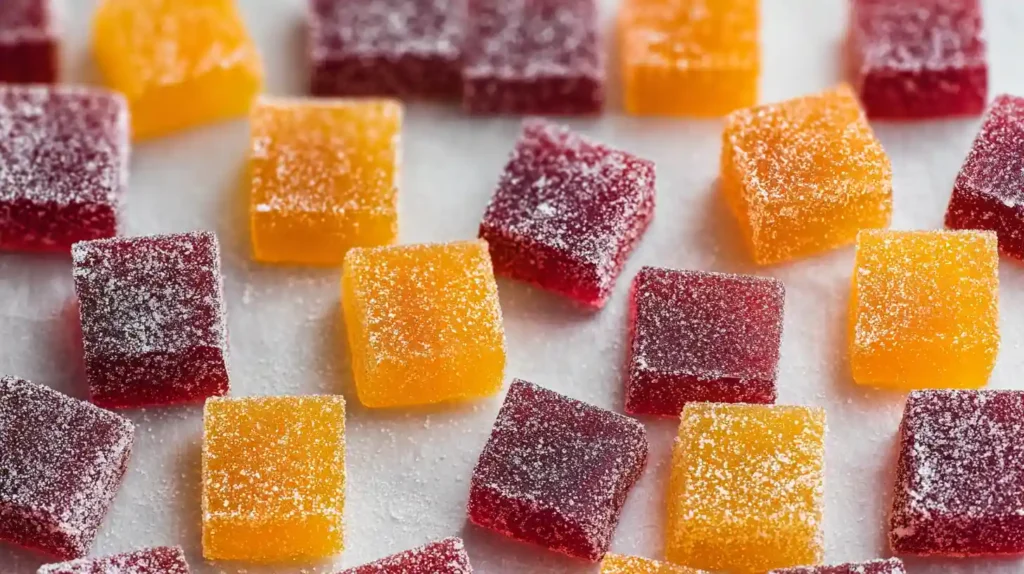
If you have ever stared at those expensive, jewel-like squares in a fancy confectionery shop and wondered if you could replicate them, the answer is a resounding yes. Homemade Pâtes de Fruits are essentially high-end fruit jellies that rely on the natural pectin in fruit to set into a firm, sliceable treat. Unlike mass-produced gummy candies that often taste artificial, these capture the pure, concentrated essence of the fruit itself. It is like biting into a solid piece of jam, but with a satisfying, tender chew that melts away slowly.
There is a bit of science involved, but do not let that scare you off. The process is mostly about temperature and timing. Once you understand how sugar, acid, and pectin interact, you can turn almost any fruit purée into these stunning sweet snack ideas. I love making them because they are naturally gluten-free and vegan, making them a safe yet impressive gift for almost anyone. Plus, seeing a tray of glistening, sugar-coated squares cooling on your counter feels incredibly accomplished.
Ingredients for Authentic Pâtes de Fruits
The ingredient list is short, but precision matters here. You cannot eyeball these measurements if you want that perfect texture.
- Fruit Purée: You can use raspberries, apricots, blackberries, or strawberries. Strain the seeds for a smoother texture.
- Granulated Sugar: This provides sweetness and helps the gel structure form. You will need some for the mix and extra for coating.
- Liquid Pectin: While some traditional recipes use apple pectin powder, liquid pectin (like Certo) is reliable and easier to find for beginners.
- Lemon Juice: The acidity is crucial. It activates the pectin and brightens the flavor of the fruit candy.
- Unsalted Butter: Just a tiny dab helps prevent excessive foaming in the pot.
Step-by-Step Instructions for Making Gummy Candy
Prepare the Pan
Line an 8×8 inch square baking pan with parchment paper. Leave an overhang on the sides so you can easily lift the slab out later. Spray the parchment lightly with cooking spray to ensure nothing sticks. This setup step is vital because once the mixture is ready, you have to move fast.
Cook the Fruit Base
Combine your fruit purée, lemon juice, and the main portion of sugar in a heavy-bottomed saucepan. Stir in the butter. Bring this mixture to a boil over medium-high heat, stirring constantly to prevent scorching. You want the sugar to dissolve completely and the mixture to start bubbling vigorously.
Add Pectin and Boil
Once the fruit mixture is at a rolling boil, pour in the liquid pectin. Return it to a full boil and cook for exactly one minute while stirring. Some recipes call for a thermometer to reach 225°F, but with liquid pectin, the timing is often more reliable. The mixture should look slightly thickened and glossy.
Set and Cool
Pour the hot mixture immediately into your prepared pan. Do not scrape the bottom of the pot too aggressively, as you might get scorched bits. Let the pan sit at room temperature undisturbed. It usually takes about 4 to 6 hours to set completely, but overnight is even better. Do not refrigerate it, as the humidity can ruin the texture.
Cutting and Sugaring Your Fruit Caramel Candy
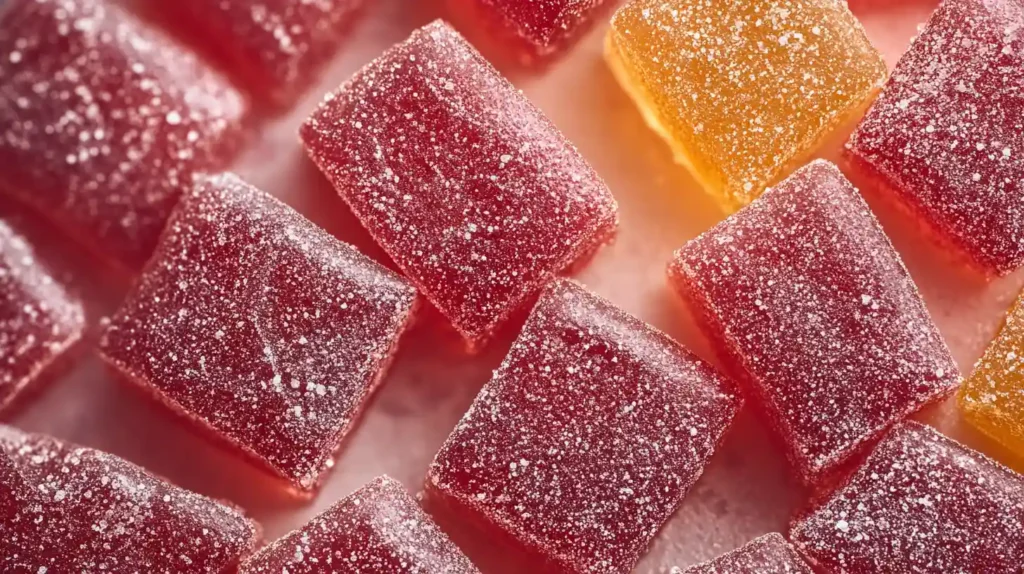
Once the block is firm, lift it out of the pan using the parchment handles. Place it on a cutting board dusted with granulated sugar. Use a sharp, slightly oiled knife to cut the slab into small 1-inch squares. If the knife gets sticky, wipe it down with a warm, damp cloth between cuts.
Toss each square in a bowl of granulated sugar until fully coated. This sugar crust adds a lovely crunch and prevents the pieces from sticking together. Place the coated pieces on a wire rack to dry out for another hour or two. This drying step helps form a crust that keeps the interior moist without becoming weeping or sticky.
Troubleshooting Common Issues
If your jellies refuse to set, it is usually an issue with pectin activation. Pectin needs high heat and acidity to work. If you did not boil it hard enough or if your fruit was low in acid, the gel won’t form. You can sometimes salvage it by re-boiling with a bit more lemon juice and pectin, but the texture might be rubbery.
Another common problem is “weeping,” where the candies become wet after a day. This happens if they are stored in an airtight container too soon or if the humidity is high. Sugared fruit naturally draws moisture from the air. To fix this, let them air dry on a rack for longer before packing them away. Avoid plastic containers; cardboard boxes or paper bags work better for short-term storage.
Variations for Healthy Fruit Desserts
While traditional recipes use granulated sugar, you can experiment with coatings. A mix of citric acid and sugar creates a sour version that kids often love. For a more sophisticated twist, try rolling them in toasted coconut or finely chopped nuts for a pine nut candy vibe, though the texture will be quite different from the classic version.
You can also layer flavors. Pour a layer of raspberry, let it set slightly, and then pour a layer of mango on top. When you slice it, you get a beautiful two-tone effect. This technique makes them look incredibly professional and adds a complex flavor profile to your sweet snack ideas.
FAQ
Can I use frozen fruit for this recipe?
Yes, frozen fruit works perfectly. Just thaw it and blend it into a purée before starting. It is often cheaper and available year-round.
How long do these stay fresh?
If stored correctly in a cool, dry place, they can last for about two weeks. The sugar acts as a preservative.
Can I use less sugar?
Unfortunately, no. Sugar is structural in candy making. Reducing it will prevent the jelly from setting properly and increase the risk of spoilage.
Why is my candy grainy?
Graininess comes from undissolved sugar crystals. Make sure you stir well and wash down the sides of the pot with a wet brush if you see crystals forming before boiling.
Is liquid pectin better than powder?
For beginners, yes. Liquid pectin is easier to incorporate without clumping. However, many professional confectioners prefer high-quality powdered apple pectin for a specific texture.
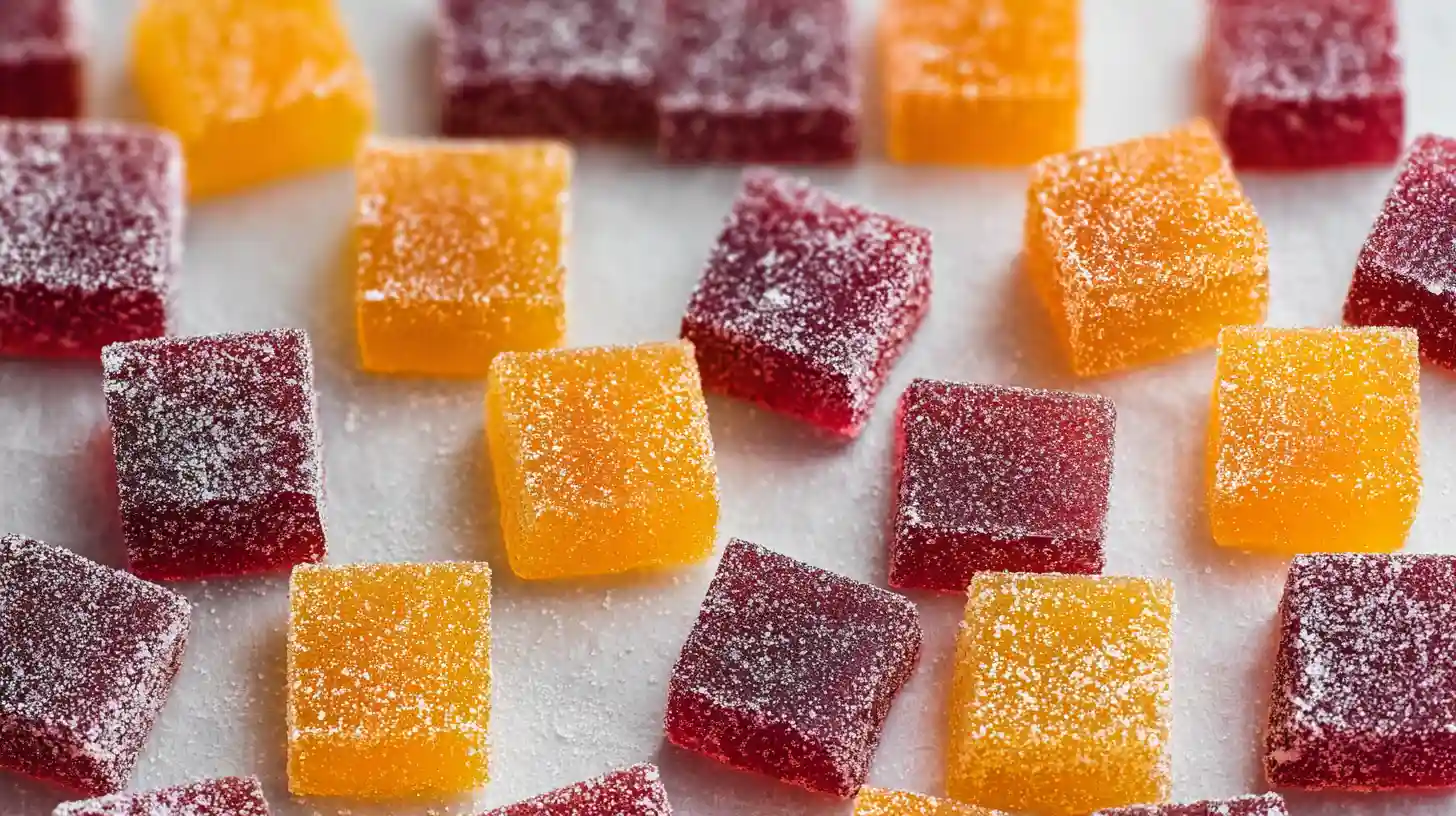

Homemade Pâtes de Fruits
Ingredients
Equipment
Method
- Line an 8×8 inch square pan with parchment paper and lightly grease it with cooking spray.
- Combine the fruit purée, 2 cups of sugar, lemon juice, and butter in a large saucepan over medium-high heat.
- Boil the mixture, stirring constantly, until the sugar is fully dissolved and it reaches a vigorous rolling boil.
- Stir in the liquid pectin and return to a boil. Cook for exactly 1 minute while stirring constantly.
- Pour the hot mixture into the prepared pan immediately. Let it sit at room temperature for at least 4 hours or overnight to set.
- Cut the firm slab into 1-inch squares and toss them in the remaining 1/2 cup of sugar to coat. Let dry on a wire rack.
Notes
- Do not double the recipe in one batch; the pectin ratio can get tricky.
- Humidity affects setting time; allow extra time on rainy days.