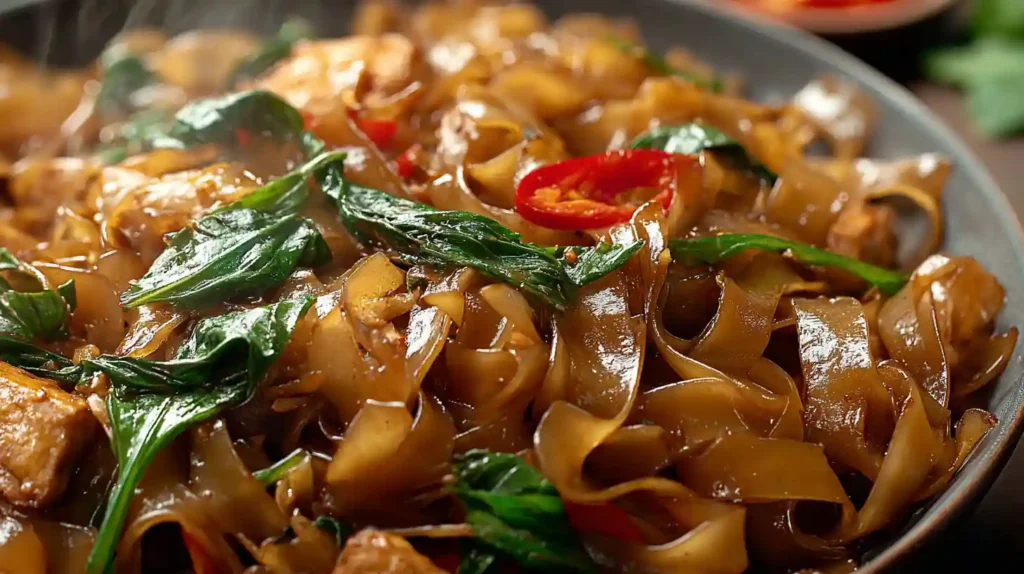
I first tasted authentic Pad Kee Mao from a street vendor in Bangkok’s Chinatown at midnight, and the combination of smoky wok flavor, fiery chilies, and aromatic Thai basil changed everything I thought I knew about noodle dishes. The vendor worked with lightning speed, flames leaping from the wok as she tossed wide rice noodles with a practiced flick of her wrist. When she handed me that steaming plate wrapped in pink paper, I understood why locals line up for this legendary late-night favorite.
Street Style Thai Drunken Noodles, known as Pad Kee Mao in Thailand, delivers bold, unapologetic flavors that wake up your taste buds with every bite. Despite the name suggesting alcohol, these noodles contain no liquor—the “drunken” moniker likely comes from their popularity as late-night food after drinking or their ability to cure a hangover with spicy, satisfying intensity. Wide, flat rice noodles get stir-fried over scorching heat with Thai holy basil, chilies, and your choice of protein in a savory-sweet-spicy sauce that creates that signature charred wok flavor called “wok hei.”
Why This Recipe Works
The secret to restaurant-quality drunken noodles at home lies in three crucial elements: extremely high heat, quick cooking time, and the right type of noodles. Fresh wide rice noodles are essential because they can withstand the intense heat without breaking apart while developing those delicious charred edges. Cooking everything in batches prevents overcrowding, which would cause steaming instead of that critical high-heat sear that creates authentic street food flavor.
I’ve streamlined the traditional technique to work with standard home stoves while keeping all the authentic flavors intact. Using oyster sauce, dark soy sauce, and fish sauce creates that complex umami base, while Thai basil added at the last second preserves its bright, anise-like flavor. The vegetables stay crisp-tender, the protein gets properly seared, and everything comes together in less time than ordering takeout.
Ingredients for Street Style Thai Drunken Noodles
- 1 pound fresh wide rice noodles (or 12 ounces dried, soaked)
- 12 ounces boneless chicken thighs, thinly sliced (or shrimp, beef, or tofu)
- 3 tablespoons vegetable oil, divided
- 5 cloves garlic, minced
- 2-4 Thai bird’s eye chilies, sliced (adjust for heat preference)
- 1 large red bell pepper, cut into strips
- 1 medium yellow onion, sliced
- 3 tablespoons oyster sauce
- 2 tablespoons fish sauce
- 1 tablespoon dark soy sauce (or regular soy sauce)
- 1 tablespoon light soy sauce
- 2 teaspoons sugar
- 1 cup loosely packed Thai holy basil leaves (or regular Thai basil)
- 2 large eggs
- 1 tablespoon water
- White pepper to taste
How to Make It
Prepare the Noodles
If using fresh rice noodles, gently separate them by hand and rinse briefly under lukewarm water to remove excess starch. They should be pliable and ready to use. For dried rice noodles, soak them in room temperature water for 30 to 40 minutes until softened but still firm. Drain thoroughly and toss with a tiny bit of oil to prevent sticking. Set them aside while you prep everything else.
Make the Sauce
In a small bowl, whisk together the oyster sauce, fish sauce, dark soy sauce, light soy sauce, sugar, and water until the sugar dissolves completely. Having your sauce mixed ahead of time is crucial because the actual cooking happens incredibly fast. Taste it and adjust if needed—it should be salty, slightly sweet, and deeply savory with that characteristic dark color from the soy sauces.
Prep Your Ingredients
Cut the chicken into thin bite-sized pieces across the grain so it cooks quickly and stays tender. Slice the bell pepper into strips, cut the onion into wedges or thick slices, and mince the garlic. Slice the Thai chilies—keep the seeds for maximum heat or remove them for a milder version. Have your Thai basil leaves washed and ready to go. Everything needs to be within arm’s reach before you turn on the heat because there’s no time to search for ingredients once you start cooking.
Cook the Protein
Heat your wok or largest skillet over high heat until it’s smoking hot. Add one tablespoon of vegetable oil and swirl to coat. Toss in the chicken pieces in a single layer and let them sear undisturbed for about 45 seconds. Flip and cook another minute until the chicken is just cooked through with some nice browning on the edges. Remove the chicken to a plate and set aside. Don’t worry if it’s not completely done—it will finish cooking when you toss everything together.
Scramble the Eggs
Add another half tablespoon of oil to the same wok. Crack the eggs directly into the hot wok and scramble them quickly with your spatula, breaking them into small curds. Cook for about 30 seconds until just set but still slightly soft. Push them to the side of the wok or remove them to the plate with the chicken.
Stir-Fry the Aromatics and Vegetables
Add the remaining oil to the wok. Toss in the minced garlic and sliced chilies, stirring constantly for about 15 seconds until incredibly fragrant but not burned. Immediately add the onion and bell pepper strips. Stir-fry for 2 to 3 minutes, keeping everything moving constantly, until the vegetables start to soften but still have crunch. The high heat should give them some charred edges.
Add Noodles and Sauce
Add the prepared rice noodles to the wok. Pour the sauce mixture over the noodles and use your spatula or tongs to toss everything together vigorously. The noodles might clump at first, but keep tossing and they’ll separate and absorb the sauce. Cook for 2 to 3 minutes, pressing the noodles against the hot wok occasionally to get those characteristic charred bits. If the noodles stick badly, add a splash of water to help loosen them.
Bring It All Together
Return the cooked chicken and scrambled eggs to the wok. Toss everything together for another minute until the chicken finishes cooking and everything is heated through and well combined. Turn off the heat and immediately add the Thai basil leaves. Toss quickly just until the basil wilts slightly and releases its aroma, about 15 seconds. Season with white pepper to taste. Serve immediately while piping hot.
Pro Tips for Success
Get your wok screaming hot before adding anything. That intense heat is what creates the smoky “wok hei” flavor that makes street food taste different from home cooking. If your stove doesn’t get hot enough, work in smaller batches so the pan temperature stays high.
Don’t substitute sweet basil for Thai holy basil if you can help it. Regular Italian basil tastes completely different and will make this dish taste off. Thai basil has that distinctive anise-like flavor that’s essential to authentic Pad Kee Mao. Asian grocery stores carry it fresh, or you can grow it easily from seed.
Fresh rice noodles make a huge difference in texture and authenticity. Look for them in the refrigerated section of Asian markets, usually labeled as “rice stick noodles” or “chow fun noodles.” They’re already cooked and just need separating and a quick rinse before stir-frying.
Delicious Variations
Make seafood drunken noodles by using large shrimp, squid, or a combination of both instead of chicken. Seafood cooks even faster, so adjust your timing—shrimp need only about 2 minutes total, and squid should be seared for just 45 seconds to avoid rubberiness.
Create a vegetarian version using firm tofu pressed to remove excess moisture, then cut into cubes and pan-fried until crispy on all sides before adding to the dish. Add extra vegetables like Chinese broccoli, baby corn, or snap peas for more substance. Substitute vegetarian oyster sauce and skip the fish sauce, using extra soy sauce instead.
Adjust the heat level to your preference. Authentic street-style Pad Kee Mao should have significant spice, but you control it. Start with one chili and add more next time if you want more heat. Adding a spoonful of Thai chili paste (nam prik pao) along with the sauce gives deeper, smoky heat.
Troubleshooting Common Issues
If your noodles turn mushy and break apart, you either overcooked them during soaking or cooked them too long in the wok. Fresh noodles need minimal cooking time, while dried noodles should still be slightly firm after soaking since they’ll soften more during stir-frying.
Noodles sticking together in a clumpy mess usually means the wok wasn’t hot enough or you added too many noodles at once, lowering the temperature. Work in batches if needed, and don’t be afraid to really crank up that heat. A splash of water helps separate stuck noodles without making them soggy.
Bland flavor despite following measurements typically means your sauces weren’t authentic Thai brands. Different fish sauce and oyster sauce brands vary wildly in intensity. Taste your mixed sauce before cooking and adjust—it should taste quite strong since it gets diluted by the noodles and vegetables.
Smart Ingredient Substitutions
Dark soy sauce gives the noodles their characteristic color and slightly sweet depth. If you can’t find it, mix regular soy sauce with a tiny bit of molasses or use sweet soy sauce (kecap manis), though reduce the added sugar since sweet soy is already sweetened.
Thai bird’s eye chilies pack serious heat. Substitute with serrano peppers for similar spiciness or jalapeños for milder heat. Red pepper flakes work in a pinch but won’t have the same fresh chili flavor. For a completely mild version, use bell peppers only and add chili oil at the table for those who want heat.
Can’t find fresh wide rice noodles? Use 12 ounces of dried rice stick noodles (the wide kind, about half-inch width). Soak them in room temperature water for 30 minutes, then drain well. They won’t be quite as tender and silky as fresh but still deliver great flavor and texture.
Storage and Make-Ahead Tips
Drunken noodles taste best fresh from the wok when the noodles are still tender and the basil is aromatic. That said, leftovers keep in an airtight container in the refrigerator for up to 3 days. The noodles will firm up and lose some texture as they cool, but the flavors actually deepen overnight.
Reheat leftovers in a hot skillet or wok with a splash of water rather than the microwave. The water creates steam that softens the noodles again, and the direct heat helps restore some of that charred flavor. Microwave reheating works but makes the noodles gummy. Add a few fresh basil leaves after reheating to brighten the flavor.
Prep work can be done ahead to make weeknight cooking faster. Slice your vegetables and protein, mix your sauce, and store everything separately in the refrigerator for up to a day. When you’re ready to cook, have everything at room temperature and within reach, then the actual cooking takes only 10 minutes.
Perfect Pairings
Thai cucumber salad provides cooling contrast to the spicy noodles. Thinly slice cucumbers and red onion, toss with rice vinegar, sugar, salt, and crushed peanuts. The crisp, tangy salad cuts through the richness perfectly.
Tom yum soup makes an excellent starter. The hot and sour flavors complement the savory-sweet noodles, creating a complete Thai meal experience. Keep it simple with a clear broth version rather than the creamy kind.
Fresh spring rolls with peanut sauce offer lighter bites alongside the hearty noodles. The fresh vegetables, herbs, and shrimp or tofu wrapped in delicate rice paper provide textural variety and balance the meal.
Frequently Asked Questions
Why are they called drunken noodles if there’s no alcohol?
The name “drunken noodles” likely comes from their popularity as late-night street food eaten after drinking, or possibly because the intense spicy flavors might cure a hangover. Another theory suggests the name refers to the stir-frying technique that requires the cook to work so fast they might appear drunk. No alcohol goes into the actual dish.
What’s the difference between Pad Thai and Pad Kee Mao?
Pad Thai uses thin rice noodles with a tangy-sweet tamarind sauce, peanuts, and bean sprouts. Pad Kee Mao features wide flat noodles with a savory-spicy sauce, Thai basil, and no peanuts. Pad Kee Mao is typically spicier and has bolder, more intense flavors compared to Pad Thai’s balanced sweet-sour taste.
Can I use regular basil instead of Thai basil?
Thai basil has a distinctive anise-like flavor essential to authentic drunken noodles. Regular Italian basil has a completely different taste profile and won’t give you the right flavor. If you absolutely can’t find Thai basil, use a combination of regular basil and fresh mint as a compromise, though it still won’t be quite the same.
How do I prevent the noodles from sticking together?
Make sure your wok or pan is extremely hot before adding noodles. Toss them constantly during cooking and don’t overcrowd the pan. If using dried noodles, don’t oversoak them—they should still be slightly firm. A small splash of water helps separate stuck noodles without making them soggy.
What protein works best for drunken noodles?
Chicken thighs stay juicier than breasts during high-heat cooking. Shrimp is traditional and cooks quickly. Thinly sliced beef sirloin or flank steak works beautifully. For vegetarian options, use pressed firm tofu pan-fried until crispy. Pork also works well—use thinly sliced pork shoulder or loin.
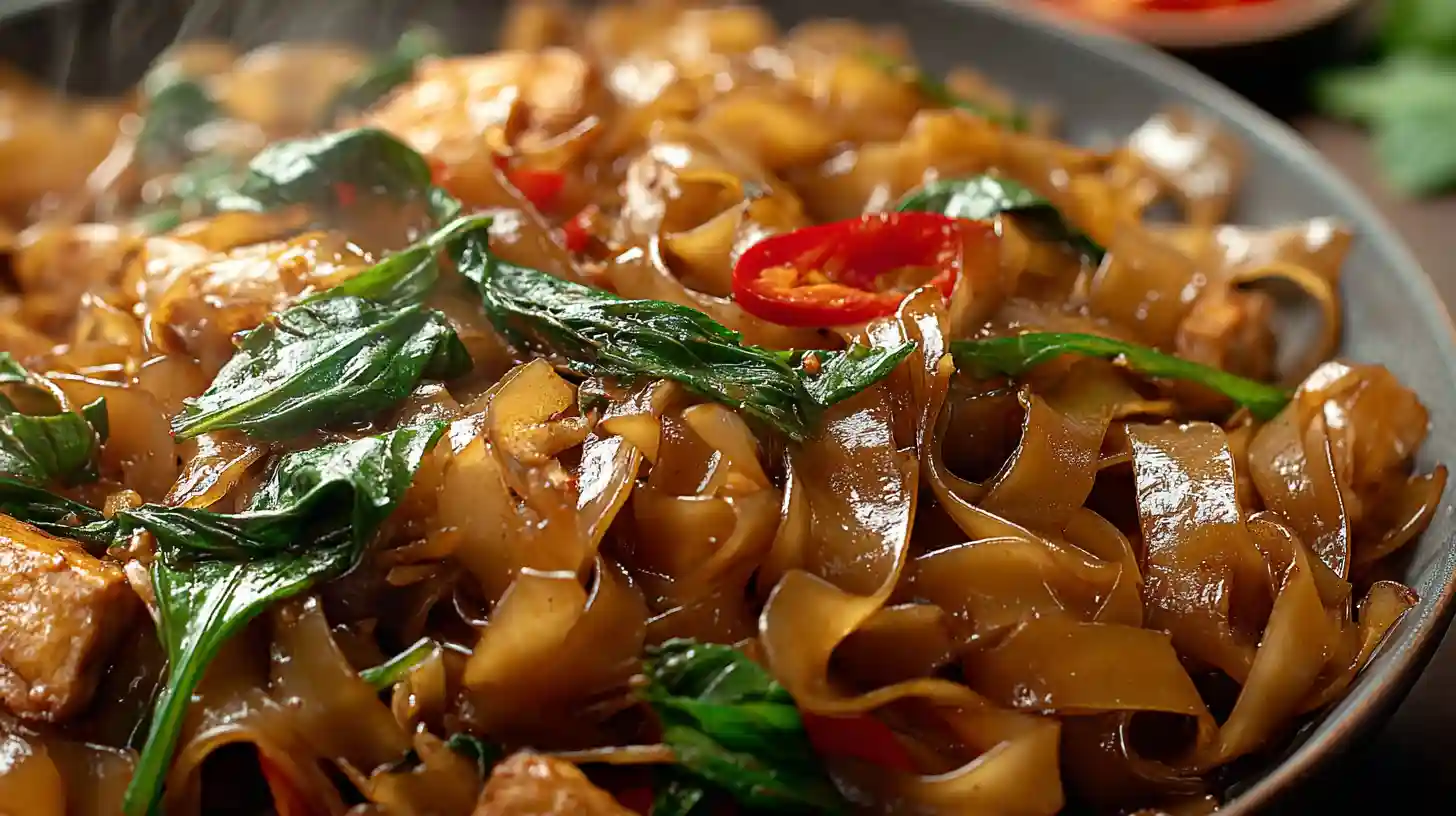

Street Style Thai Drunken Noodles (Pad Kee Mao)
Ingredients
Equipment
Method
- If using fresh rice noodles, gently separate and rinse briefly. For dried noodles, soak in room temperature water for 30 to 40 minutes until softened but firm. Drain and toss with a bit of oil.
- In a small bowl, whisk together oyster sauce, fish sauce, dark soy sauce, light soy sauce, sugar, and water. Set aside.
- Heat wok over high heat until smoking. Add 1 tablespoon vegetable oil. Add chicken and sear 45 seconds undisturbed, then flip and cook 1 minute more until just cooked. Remove to plate.
- Add ½ tablespoon oil to wok. Crack eggs directly into wok and scramble quickly for 30 seconds. Push to side or remove to plate.
- Add remaining oil. Stir-fry garlic and chilies for 15 seconds until fragrant. Add onion and bell pepper, stir-fry 2 to 3 minutes until slightly softened with charred edges.
- Add noodles and pour sauce over them. Toss vigorously for 2 to 3 minutes, pressing noodles against wok occasionally to char. Add splash of water if sticking.
- Return chicken and eggs to wok. Toss 1 minute until heated through. Turn off heat and add Thai basil. Toss 15 seconds until wilted. Season with white pepper. Serve immediately.
Notes
- Fresh wide rice noodles (chow fun) give the best texture and are found in Asian markets’ refrigerated sections.
- Thai holy basil (bai grapao) has a distinctive anise flavor essential for authenticity. Thai basil is the second-best option.
- Extremely high heat is crucial for authentic wok hei (smoky flavor). Don’t be afraid to crank up the heat.
- Work in batches if your wok isn’t large enough to prevent overcrowding and steaming.
- Adjust chilies to your heat preference. Start with less and add more next time.
- Store leftovers refrigerated for up to 3 days. Reheat in hot skillet with splash of water.