
Let’s be honest, some Thanksgiving stuffings feel more like soggy bread pudding or dry herb bombs than a comforting side dish. But this? This is the one that hits you with that perfect buttery nostalgia. The one that takes you back to a kitchen filled with steam and laughter, where someone’s elbow is always in your space, but the stuffing always makes it worth it.
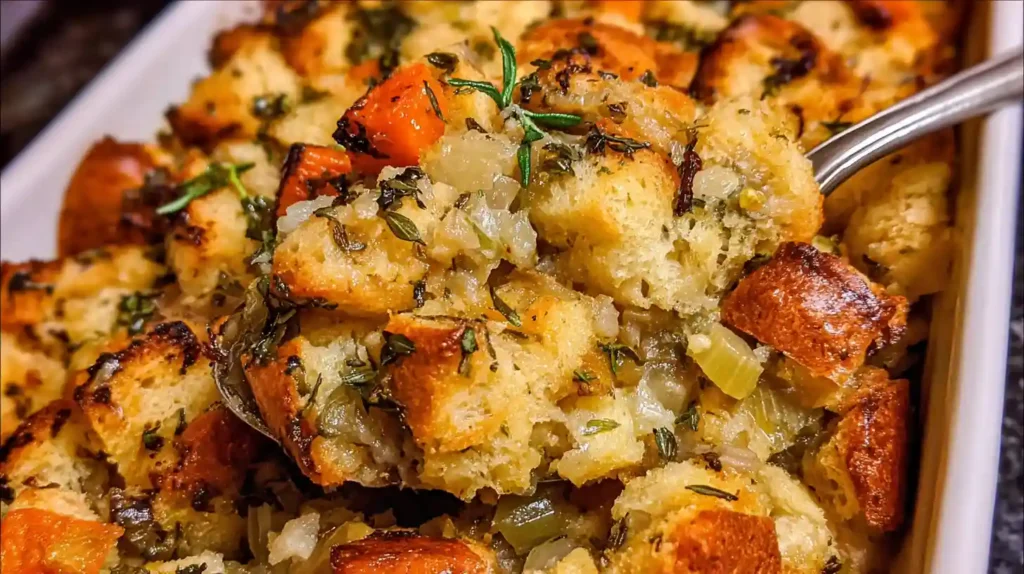
This traditional Thanksgiving stuffing recipe is everything you want in a classic: crisp golden edges, a soft center that melts in your mouth, and the unmistakable warmth of onions, celery, and fresh herbs. No gimmicks. No detours for fruit, nuts, or sausage. Just bread, butter, and tradition done right.
Whether you’re hosting your first Thanksgiving or you’ve been orchestrating holiday meals for decades, this stuffing is the kind of simple perfection that grounds the whole table. It’s make-ahead friendly, freezer-safe, and flexible enough for the turkey or a standalone casserole dish.
By the end of this post, you’ll have the confidence (and maybe a little excitement) to ditch the boxed stuff and serve a side dish that people quietly fight over. Because let’s face it — the good stuffing never makes it to leftovers.
Table of contents
Why This Stuffing Recipe Wins Hearts
We all have a mental picture of “the perfect Thanksgiving stuffing.” For some, it’s Grandma’s sacred recipe. For others, it’s the flavor they didn’t even know they were missing until that one holiday dinner blew everything else out of the water.
This recipe is built on one simple philosophy: keep it classic, keep it craveable. That means no distractions just the holy trinity of bread, butter, and herbs — treated with the respect they deserve.
What Makes It Stand Out?
- Crispy, buttery edges. Every bite from the corner of the pan feels like a reward.
- Soft, custardy middle. It holds just enough structure without going mushy.
- Herb-forward flavor. Think Simon & Garfunkel in edible form: parsley, sage, rosemary, and thyme.
- Versatile prep. Make it ahead, freeze it, or stuff it in your turkey — it works.
- Crowd-converting potential. Even “I hate stuffing” folks have been known to go back for seconds.
It’s also incredibly adaptable. Want it more rustic? Tear your bread. Want a neater presentation? Cube it. Prefer ciabatta over white sandwich bread? Go for it. The core process stays the same, and the result always delivers.
This stuffing doesn’t try to reinvent Thanksgiving. It honors it — one buttery, golden-crusted bite at a time.
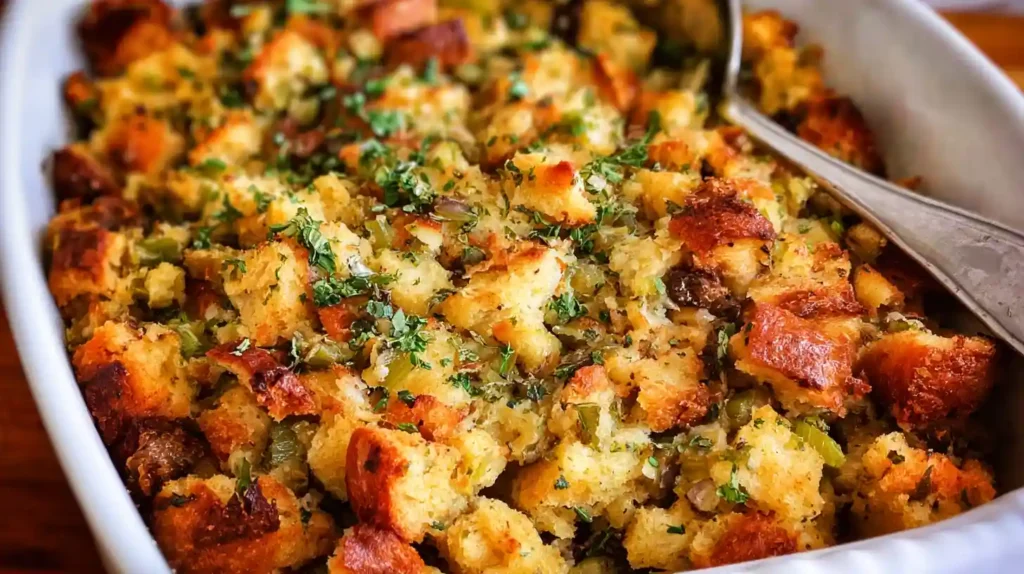
Ingredients You’ll Need (And Why They Matter)
Great stuffing doesn’t start in the oven. It starts with good choices — especially when it comes to what goes in the bowl. Here’s what you’ll need and why each ingredient pulls its weight.
| Ingredient | Amount | Notes |
|---|---|---|
| Bread | 1 pound | White, French, Ciabatta, or Sourdough |
| Unsalted Butter | 1 cup (2 sticks) | For sautéing and richness |
| Onion | 1 large (3½ cups chopped) | Yellow or white |
| Celery | 2 cups (¼-inch dice) | Include leafy tops for extra flavor |
| Fresh Parsley | ⅓ cup | Flat-leaf recommended |
| Fresh Sage | ¼ cup | Chopped |
| Fresh Rosemary | 1 tablespoon | Minced very fine |
| Fresh Thyme Leaves | 1 tablespoon | No stems |
| Kosher Salt | 2 teaspoons | Adjust to taste |
| Black Pepper | 1 teaspoon | Freshly ground if possible |
| Chicken/Turkey Broth | 2 to 2½ cups | High-quality, adjust based on bread texture |
| Eggs | 2 large | Beaten, for binding |
| Butter (for greasing pan) | 1 tablespoon | Or use cooking spray |
How to Make the Perfect Stuffing Step-by-Step
If stuffing feels intimidating, don’t worry it’s more forgiving than most holiday dishes. With the right rhythm (and a little butter confidence), you’ll get that golden, fluffy magic every time.
Toasting vs Staling Bread: Why It Matters
Here’s a myth worth busting: stale bread ≠ makes good stuffing. Leaving bread out overnight just makes it leathery. What you want is toasted bread — dry on the outside, tender inside, ready to soak up broth like a sponge.
- Step 1: Cut or cube 1 lb of bread into 1–2 inch pieces.
- Step 2: Spread on a baking sheet and toast at 250°F for about 1 hour, stirring halfway. Don’t brown it — just dry and crisp it slightly.
Pro Tip: Cubing > tearing. It holds shape better once moistened.
The Veggie Sauté: Butter Is the MVP
- Step 3: Melt 1 cup of butter in a large skillet over medium heat.
- Step 4: Add chopped onions (3½ cups) and celery (2 cups).
- Step 5: Sauté for 7–10 minutes until softened, not browned. The butter should shimmer, not sizzle.
Why this matters: That aromatic mix infuses every bite. And yes, all that butter is intentional — your stuffing depends on it.
Mixing It All: Go By Feel
- Step 6: Combine the toasted bread, sautéed veggies, and chopped herbs in a large bowl.
- Step 7: Add salt and pepper, then gently stir. Taste for seasoning.
- Step 8: In a separate bowl, whisk 2 eggs into 2 cups of warm broth.
- Step 9: Pour the broth mixture over the bread in stages, using your hands to mix and test moisture.
The test: It should be moist but not soggy. No puddles. If needed, add up to ½ cup extra broth — or stop early if it feels just right.
The Bake: Soft Inside, Crispy Outside
- Step 10: Grease a 9×13-inch pan with butter.
- Step 11: Spoon the stuffing mixture in evenly and cover with foil.
- Step 12: Bake at 350°F for 40 minutes.
- Step 13: Remove foil and bake uncovered 25–35 minutes until golden and crispy on top.
What if my stuffing turns out dry?
Add a few tablespoons of warm broth and cover with foil. Reheat gently in the oven for 10–15 minutes. A drizzle of gravy works wonders, too.
Can You Make It Ahead or Freeze It?
Absolutely and honestly, you should. Thanksgiving Day is already a juggling act. Making your stuffing ahead of time is one of the best stress-saving moves you can make.
Make-Ahead (Overnight) Instructions
If you want fresh-baked stuffing without the rush:
- Assemble everything as directed (bread toasted, veggies sautéed, broth added).
- Spoon into a buttered baking dish.
- Wrap tightly with plastic wrap and refrigerate for up to 24 hours.
To bake:
Remove from fridge while the oven preheats. Keep it covered with foil and bake as usual — just like fresh! The only difference? You’re sipping coffee instead of frantically dicing celery.
Baking more than 24 hours later? Freeze it instead — refrigerator air will dry it out.
Freeze Before Baking (Best Option)
This is the most texture-safe method. No drying out. No panic.
- Assemble raw stuffing in a freezer- and oven-safe dish.
- Wrap with plastic wrap and foil.
- Optionally place in a 2-gallon freezer bag (extra protection).
- Freeze for up to 3 months.
To bake:
No thawing. Go straight from the freezer to the oven (remove the plastic first!). Cover and bake as directed, then uncover and add 10–15 extra minutes for full crispiness.
Freeze After Baking (Still Good)
Baked the stuffing already and want to store leftovers?
- Let it cool completely first — this prevents ice crystals from ruining texture.
- Wrap tightly (foil + plastic wrap).
- Freeze up to 3 months.
To reheat:
Let sit at room temp for 15–30 minutes. Cover and bake at 350°F for 45 minutes, then uncover and crisp for another 10–15.
Glass pans need more time to come to temp — don’t rush it or they may crack.
Will freezing change the texture?
Not if you follow the rules. Toasted bread and good wrapping = freezer-friendly stuffing that tastes just as fresh.
Stuffing Variations and Add-Ins (Optional but Fun)
This traditional stuffing is a purist’s dream — buttery bread, fragrant herbs, and just the right texture. But maybe you’re the kind of cook who likes to color outside the lines. Good news: this recipe is a perfect base for your own twists.
Add-Ins You Can Try
- Sausage – Brown ½ to 1 lb and mix it in before baking for a savory, meaty upgrade.
- Dried Cranberries – A handful adds tart-sweet bursts (great with sausage).
- Apples or Pears – Dice and sauté briefly before adding for a sweet crunch.
- Pecans or Walnuts – Toasted nuts add texture and a nutty depth.
- Mushrooms – Sauté with the onions and celery for an earthy flavor.
- Parmesan or Gruyère – A sprinkle on top adds an umami boost and a cheesy crust.
Dietary Swaps
- Vegetarian? Use veggie broth — and skip the sausage.
- Dairy-Free? Sub olive oil for the butter (you’ll lose some richness, but it works).
- Gluten-Free? Use your favorite GF bread — but toast it well for structure.
Herb Adjustments
Don’t love rosemary? Use less or swap for marjoram. Want a bolder flavor? Increase the sage. This recipe flexes with your preferences.
Can I use cornbread instead?
You can, but be ready for a different texture. Cornbread tends to be more fragile and sweet. Try a half-white bread, half-cornbread mix for the best of both worlds.
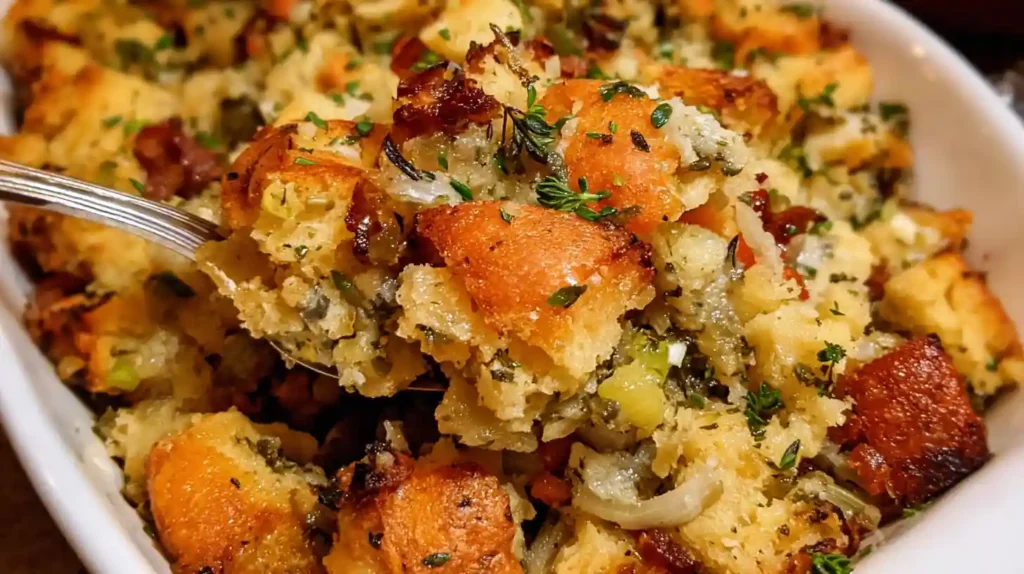
Leftover Stuffing Hacks You’ll Actually Crave
You made a mountain of stuffing and somehow, miraculously, there’s still some left. Good. Because day-two stuffing might be even better than day one — especially when you get creative.
Creative Ways to Use Leftover Stuffing
- Thanksgiving Sandwiches
Stack it high with turkey, cranberry sauce, and gravy on soft rolls. Bonus points for a fried egg. - Crispy Stuffing Hash
Pan-fry leftover stuffing in a skillet until golden and crunchy. Add eggs for a killer brunch. - Stuffing Waffles
Yep, really. Mix with a little broth, press into a waffle iron, and serve with gravy or a fried egg. - Meatball or Meatloaf Filler
Sub it in for breadcrumbs — the herbs and butter add instant flavor. - Stuffed Bell Peppers
Scoop into halved peppers, top with cheese, and bake. Easy weeknight win. - Zucchini Boats
Hollow out zucchini, fill with stuffing, top with cheese, and bake. Lighter, still cozy. - Stuffing Shepherd’s Pie or Pot Pie
Layer leftover turkey, vegetables, gravy, and top with stuffing (instead of potatoes or crust). Bake until bubbly.
Can I freeze leftovers after Thanksgiving?
Yes fully baked stuffing freezes well. Cool it completely, wrap tightly, and freeze up to 3 months. Reheat covered at 350°F until hot, then uncover to crisp up.
FAQs
Can I use dried herbs instead of fresh?
Yes. While fresh herbs add brightness, dried versions work just fine. Use about:
- 2 tbsp dried parsley
- 2 tsp dried sage
- 1 tsp dried thyme
- 1 tsp dried rosemary
Sauté them with the butter, onions, and celery to “wake them up.”
What kind of bread is best for stuffing?
It depends on your texture goals:
- Soft white bread = melt-in-your-mouth
- French/Italian = hearty, chewy edges
- Sourdough = tangy and rustic
Always toast, never stale — toasted bread absorbs broth better without getting tough.
Can I make it gluten-free?
Yes — use gluten-free bread, but toast it well first. Be gentle when mixing since GF bread can be more fragile. Check your broth label, too.
Can I halve or double the recipe?
Absolutely. Halve for small gatherings (use an 8×8 pan), double for a crowd (use two 9x13s or a deeper casserole). Just scale the liquid and herbs accordingly — and always test moisture by hand.
How do I fix stuffing that’s too dry or soggy?
- Too dry? Drizzle warm broth over the top, cover with foil, and reheat.
- Too wet? Spread it out in a thinner layer and bake it uncovered longer.
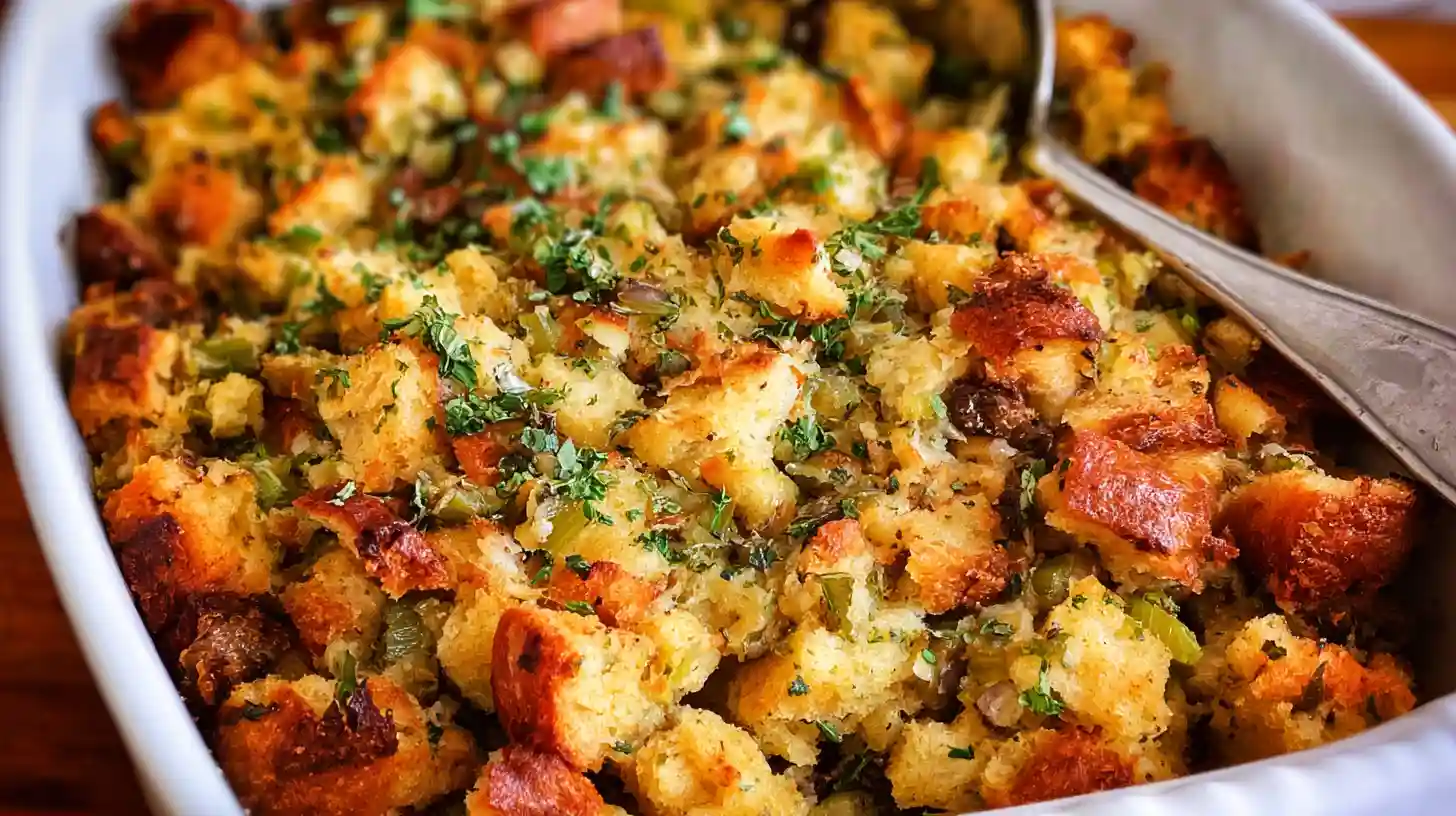

Traditional Thanksgiving Stuffing Recipe
Ingredients
Equipment
Method
- Preheat the oven to 250°F. Cube or tear the bread into 1–2 inch pieces and toast on a baking sheet for about 1 hour, stirring occasionally. Do not brown.
- In a large skillet, melt the butter over medium heat. Add chopped onion and celery, and sauté for 7–10 minutes until softened but not browned.
- In a large mixing bowl, combine the toasted bread, sautéed vegetables, chopped herbs, salt, and pepper. Stir to distribute evenly.
- In a separate bowl, whisk together the eggs and broth. Gradually pour over the bread mixture, mixing with your hands to ensure even moisture. The stuffing should feel moist but not soggy.
- Grease a 9×13-inch casserole dish with butter. Transfer stuffing mixture into the dish and cover with foil.
- Bake at 350°F for 40 minutes covered. Remove foil and bake an additional 25–35 minutes until the top is golden and crispy.
Notes
Looking for more cooking and baking inspiration? Browse our Pinterest boards or join the conversation with us on Facebook.