
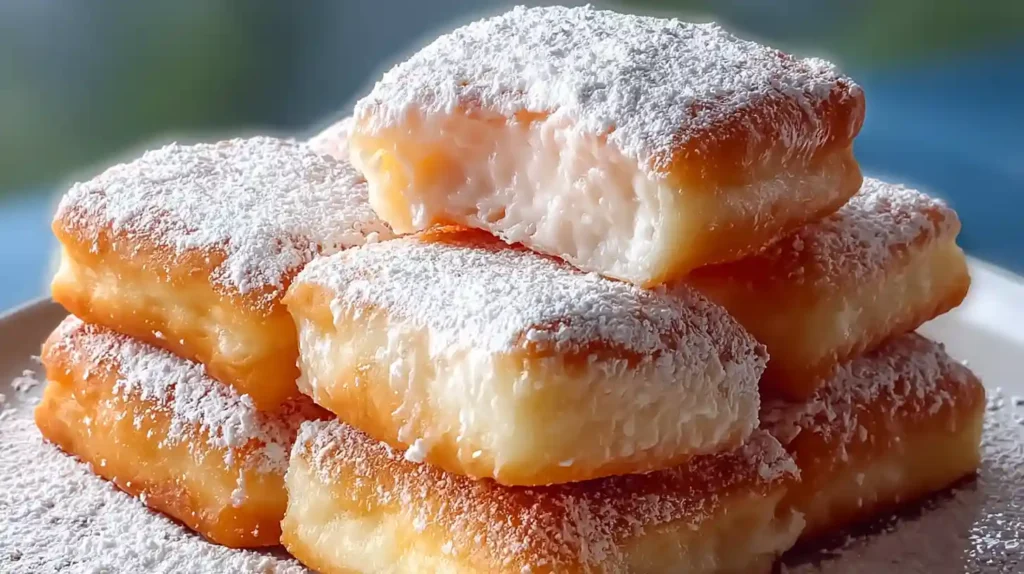
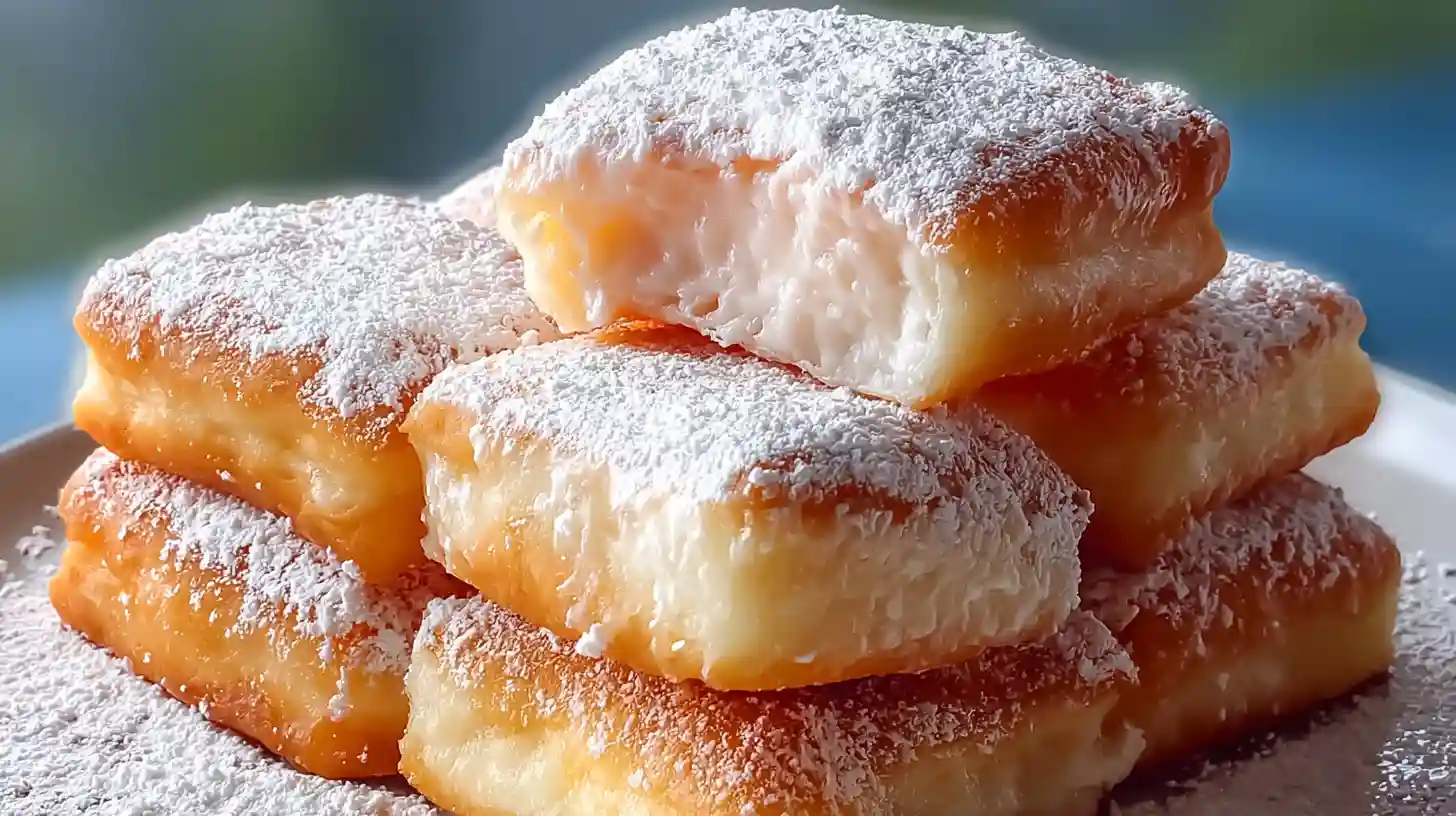
Fried dough has a way of stopping everything. The smell alone is enough. This buttermilk beignet square recipe leans into that with a dough that is tender from the inside out, slightly crisp at the edges, and dusted in enough powdered sugar to make a mess worth cleaning up. The buttermilk does real work here, giving the dough a subtle tang and a soft, open crumb that plain milk just cannot replicate. These are best eaten warm, ideally within minutes of coming out of the oil.
This is a yeast-based recipe, so plan for a rise time of about an hour. The wait is completely worth it. Once the dough is ready, shaping and frying moves quickly, and the whole batch can be on the table in under 30 minutes from that point forward.
Ingredients for Buttermilk Beignet Square
- 1 cup buttermilk, warmed to about 110 degrees F
- 2 1/4 tsp active dry yeast (1 standard packet)
- 3 tbsp granulated sugar
- 2 3/4 cups all-purpose flour, plus more for dusting
- 1/2 tsp salt
- 1/4 tsp baking soda
- 1 large egg, room temperature
- 2 tbsp unsalted butter, melted and slightly cooled
- Vegetable oil for frying, about 4 cups
- 1 1/2 cups powdered sugar for dusting
For the pastry glaze variation, mix 1 cup powdered sugar with 2 tablespoons milk and a drop of vanilla until smooth. Drizzle over warm beignets instead of dusting for a glazed beignets finish that looks polished and tastes incredible.
How to Make Buttermilk Beignet Squares From Start to Finish
Warm the buttermilk gently, it should feel just warm to the touch, not hot. Combine it with yeast and sugar and let it sit for 5 to 8 minutes until foamy. If nothing happens, the yeast is likely old or the buttermilk was too hot. Start over with fresh yeast rather than pushing forward.
- Whisk together flour, salt, and baking soda in a large bowl.
- Add the yeast mixture, egg, and melted butter to the dry ingredients and mix until a soft dough forms.
- Knead on a lightly floured surface for 4 to 5 minutes until smooth and slightly tacky.
- Place dough in a lightly oiled bowl, cover with a towel, and let rise in a warm spot for 1 hour until doubled.
- Roll the dough out to about 1/4 inch thickness on a floured surface.
- Cut into 2 to 3 inch squares using a sharp knife or bench scraper.
- Heat oil in a deep pot to 360 degrees F. Use a thermometer for accuracy.
- Fry beignets in small batches for 1 to 2 minutes per side until deep golden brown.
- Drain on a paper towel-lined plate and dust immediately and generously with powdered sugar.
Frying in small batches keeps the oil temperature stable. Adding too many at once drops the temperature and causes the beignets to absorb oil instead of frying properly. Three or four squares at a time is the right pace.
Ingredient Substitutions
No buttermilk at home? This counts as one of the easiest baking recipes without milk alternatives, because you can make a quick substitute by combining 1 cup of regular milk with 1 tablespoon of white vinegar or lemon juice. Stir and let it sit for 5 minutes before using. It works almost identically in the dough. For a dairy-free version, use oat milk with the same acid trick. The texture changes very slightly but the result is still a good beignet. As far as what to make with buttermilk when you already have it on hand, this recipe is one of the best uses since the tang is actually highlighted by the frying process.
Mistakes That Sink the Dough
Skipping the thermometer is the most common problem. Oil that is too cool produces greasy, doughy beignets. Oil that is too hot burns the outside before the center cooks through. 360 degrees F is the target, and checking it between batches matters because the temperature drops every time you add dough. Another issue is rolling the dough too thick. Anything above 1/4 inch and the center stays raw while the outside colors. Cut squares evenly so they cook at the same rate. Let the dough rise fully too, an under-proofed dough fries up dense rather than airy and open inside.
Variations to Try
Among yeast recipes baking desserts, this dough is unusually flexible. Roll it thinner for crispier, lacier beignets or keep it closer to 1/3 inch for a thicker, bread-like bite. For baking with buttermilk recipes that go in a different direction, you can bake these squares at 400 degrees F for 10 to 12 minutes instead of frying, brushed with butter before and after. The result is more like a biscuit square, but still tender and delicious. Add a teaspoon of cinnamon to the dough for a warm spiced version, or a bit of lemon zest for something brighter that pairs well with fruit preserves on the side.
Storing and Serving
Beignets are genuinely best the moment they come out of the oil. That said, leftovers can be stored in an airtight container at room temperature for up to 1 day. Reheat in an air fryer at 350 degrees for 2 to 3 minutes or in an oven at 375 degrees for about 5 minutes. Avoid microwaving, it softens the exterior completely. The best beignet recipe experience is always fresh and warm, so if you are making these for guests, fry them in stages and dust each batch right before serving. A small bowl of the pastry glaze on the side for dipping also makes for a fun serving option.
FAQ
Can I make the dough the night before?
Yes. After the first rise, punch the dough down, cover it tightly, and refrigerate overnight. The next day, let it come to room temperature for 20 minutes before rolling and frying.
Why are my beignets not puffing up?
This usually comes from under-proofed dough or oil that is not hot enough. Make sure the dough has fully doubled during the rise, and always check oil temperature before each batch.
Can I use instant yeast instead of active dry yeast?
Yes. Use the same amount and skip the proofing step. Mix the instant yeast directly into the flour and reduce the rise time by about 15 minutes since instant yeast works faster.
What oil is best for frying beignets?
A neutral oil with a high smoke point works best, vegetable oil, canola oil, or peanut oil are all good choices. Avoid olive oil, which has too low a smoke point and adds an unwanted flavor.
How do I keep the powdered sugar from melting?
Dust the beignets right before serving rather than right out of the oil. The steam from very hot beignets melts the sugar quickly. A brief 2-minute rest before dusting helps it stick and stay visible longer.
Can these be baked instead of fried?
They can, though the texture is different. Bake at 400 degrees F for 10 to 12 minutes and brush with melted butter immediately after. The flavor is still good, but expect something closer to a soft biscuit square rather than a classic fried beignet.
Buttermilk Beignet Square
Ingredients
Equipment
Method
- Proof the yeast by combining warm buttermilk, yeast, and sugar. Let sit 5 to 8 minutes until foamy.
- Mix flour, salt, and baking soda in a large bowl, then add yeast mixture, egg, and melted butter. Stir until a soft dough forms.
- Knead on a floured surface for 4 to 5 minutes until smooth and slightly tacky.
- Rise the dough in a lightly oiled covered bowl for 1 hour until doubled in size.
- Roll dough to 1/4 inch thickness and cut into 2 to 3 inch squares.
- Heat oil in a deep pot to 360 degrees F and fry beignets in small batches for 1 to 2 minutes per side until golden brown.
- Drain on paper towels and dust generously with powdered sugar. Serve immediately.
Notes
- Check oil temperature between batches to maintain 360 degrees F.
- Do not crowd the pot – fry 3 to 4 squares at a time only.
- Dust with powdered sugar after a 2-minute rest for best coverage.
- Dough can be made the night before and refrigerated after the first rise.