Mashed potatoes aren’t just a side dish. They’re the side dish. The one that everyone secretly hopes will be on the table, the one that says “you’re home” before the first bite.
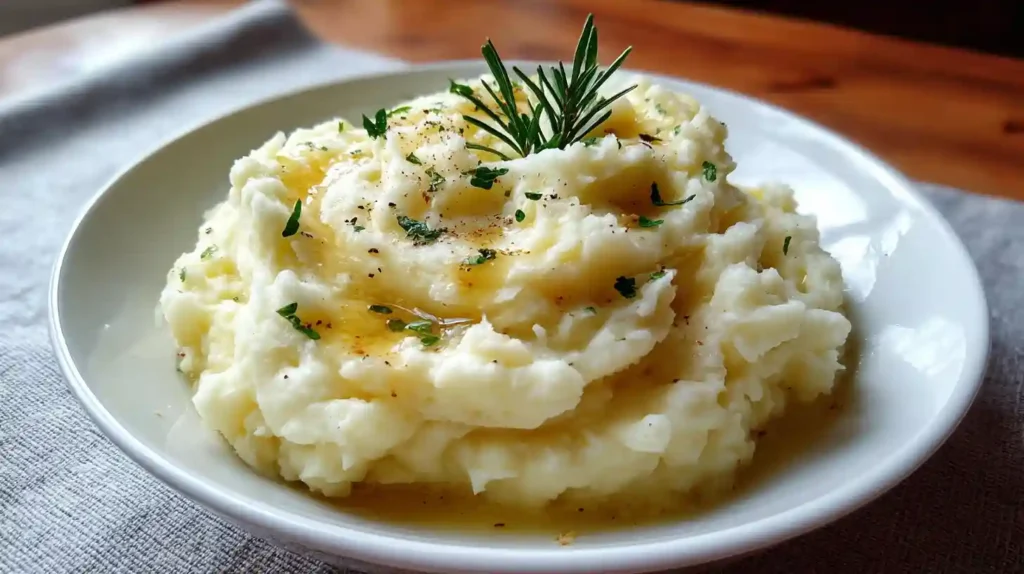
The good news? You don’t need to be a Michelin chef or own fancy gadgets to make restaurant-level mashed potatoes. Just a few smart techniques, the right kind of potato, and one ingredient people often underestimate: patience.
These mashed potatoes are the result of years of trial, error, and a few last-minute holiday scrambles. They’re ultra-creamy, perfectly fluffy, and rich without being heavy. Whether you’re serving them alongside Swedish meatballs, a ribeye, or a roast turkey, they show up and show off — every time.
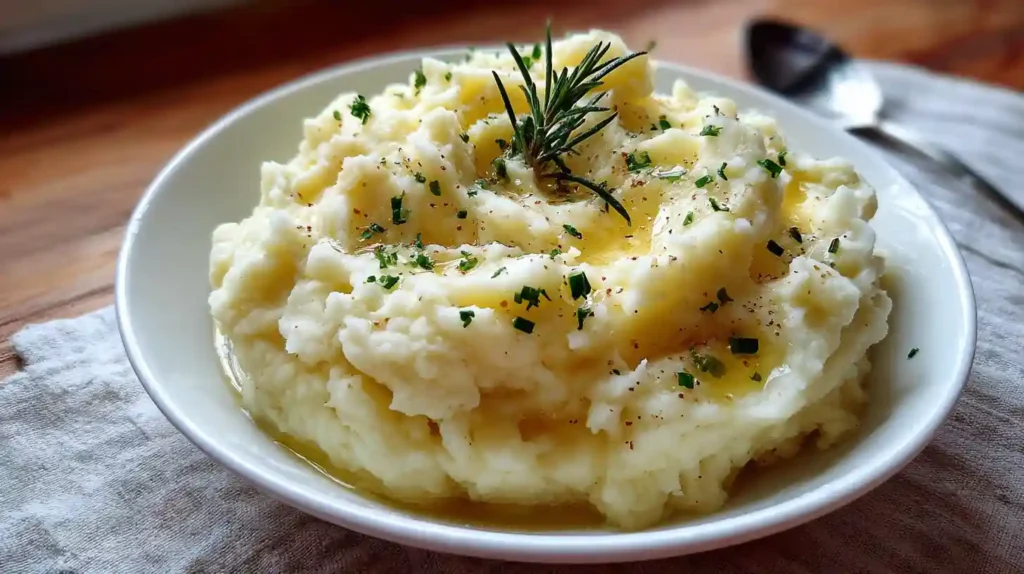
So if you’ve ever wrestled with lumps, gluey textures, or just “meh” mashed potatoes, stay with me. This version doesn’t just work.
Table of contents
Why These Mashed Potatoes Work (And Others Fall Flat)
Mashed potatoes can seem deceptively simple. Boil, mash, season — right? But anyone who’s ended up with gluey paste or underwhelming texture knows there’s more going on beneath the surface (literally). This version works not because it’s fussy, but because it respects the chemistry behind perfect mash.
It Starts with the Right Potato
Russet potatoes are your best friend here. Why? Because they’re high in starch and low in moisture, which means they break down easily and absorb butter and milk like a dream. Yukon Golds come in as a close second: they offer a slightly creamier bite and a natural butteriness, though they’re a bit waxier. You can even blend the two if you’re feeling adventurous.
Avoid waxy varieties like Red Bliss. They don’t mash as cleanly and tend to fight back when you’re going for smooth.
Overcooking Is Actually Encouraged (For Once)
Here’s a surprising twist: you should overcook your potatoes. Seriously. Let them go a few minutes past fork-tender. The more broken down they are, the smoother your result and unlike pasta or green beans, there’s no textural penalty. Just avoid undercooking them, which leaves hard bits that no amount of mashing can fix.
The Ricer = Creamy MVP
You’ve probably heard this before, but it bears repeating: a potato ricer changes everything. It separates fibers evenly, avoids overworking the starch, and turns boiled spuds into soft, snow-like shreds — the perfect base for creamy mash.
If all you have is a masher, that’s totally fine. Just be gentle. The more you mash and stir, the more starch gets released, and that’s what turns your dreamy side dish into gummy wallpaper paste.
Why do my mashed potatoes turn out gluey?
Answer: The biggest culprit is overmixing — especially with a hand mixer or food processor. Potatoes are full of starch, and when agitated too much, they release it in ways that lead to a sticky, elastic mess. Use a ricer or mash lightly, fold gently with a spatula when adding butter and milk, and you’ll be golden. It delivers. Let’s get into it.
Ingredients & Tools You’ll Need
Good mashed potatoes are 80% technique — but that last 20%? It’s what you put into the pot. The ingredients here are simple, but every choice plays a role. And trust me, they matter more than you think.
| Ingredient | Amount | Notes |
|---|---|---|
| Russet potatoes | 3 pounds | Or Yukon Gold for a creamier texture |
| Salt | 2 tablespoons | For boiling water, not the final mash |
| Unsalted butter | ⅓ cup (cut into pieces) | Add while potatoes are hot |
| Whole milk | ½–1 cup | Add gradually for desired creaminess |
| Ground black pepper | ½ teaspoon (or to taste) | Adjust based on preference |
Step-by-Step: How to Make Mashed Potatoes
Making perfect mashed potatoes doesn’t require chef-level skills — just care, timing, and the confidence to trust a few counterintuitive moves. Here’s exactly how to do it, without overthinking (or overmixing).
Step 1: Prep and Chop
Peel your potatoes and cut them into 1-inch cubes. Consistency matters here — smaller pieces cook more evenly and faster. You’re not being graded on geometry, just aim for uniform size.
Pro tip: If you’re not cooking them immediately, keep the chopped potatoes in cold water to prevent browning.
Step 2: Boil Like You Mean It
Place the potatoes in a large pot and cover them with cold water, about an inch above the level of the potatoes. Add the salt right away — this is your only shot to season them from the inside out.
Bring to a boil, then reduce to a simmer. Let them go for 15–20 minutes, or until they’re completely fork-tender — soft all the way through, not just on the edges.
Don’t worry about overcooking — in fact, it’s encouraged. Just don’t undercook, or you’ll be chasing lumps later.
Step 3: Drain and Rice
Drain thoroughly in a colander, then immediately pass the hot potatoes through a ricer into a large bowl. The heat helps the butter melt smoothly later — and prevents cooling that leads to gluey texture.
No ricer? Use a masher gently, in short presses — no pounding or stirring yet.
Step 4: Fold in the Butter
While the potatoes are still hot, add your butter chunks and let them sit for a few seconds. Then fold gently with a spatula until melted and distributed. Think folding, not mixing — you’re coaxing the flavor in, not whipping it.
Step 5: Add Milk and Pepper
Add milk a bit at a time, folding gently as you go. Stop when you reach your preferred consistency — smooth but not runny, rich but not heavy. Finish with freshly ground black pepper.
Taste. Adjust. Smile.
Can I skip peeling the potatoes?
Answer: Technically yes leaving skins on adds a rustic vibe (especially with Yukon Golds). Just know the texture will be more rustic, too. If you’re going for silky-smooth mash, peeling is the way.
Pro Tips & Smart Variations
Mashed potatoes seem basic — until you realize how easy they are to mess up… or level up. Whether you’re feeding picky kids, hosting the in-laws, or just chasing that “how is this so good?” moment, these tips and tweaks can help you get there.
Pro Tips for Foolproof Mashed Potatoes
- Start in cold water. Always. Dropping chopped potatoes into boiling water cooks the outside too fast while leaving the inside firm. Cold water brings everything up to temp evenly.
- Salt the water like the ocean. It’s your only chance to deeply season the potatoes. Once they’re mashed, it’s too late.
- Don’t skip the butter wait. Letting it sit on the hot potatoes for a few seconds before folding helps it melt gently and coat evenly — no greasy puddles.
- Fold, don’t stir. Aggressive mixing releases too much starch and creates gluey texture. Think gentle, deliberate folding with a spatula.
- Keep them warm without stress. Got a sous vide? Pop the mashed potatoes in a sealed bag and keep them at 140°F — hours ahead of dinner, stress-free. No sous vide? A slow cooker on “warm” also works.
Creative Variations to Try
Ready to riff? Here are some simple but impactful upgrades:
- Garlic mashed potatoes: Add 3–4 cloves of roasted garlic during the butter step.
- Cheddar & chive: Fold in shredded sharp cheddar and chopped fresh chives at the end.
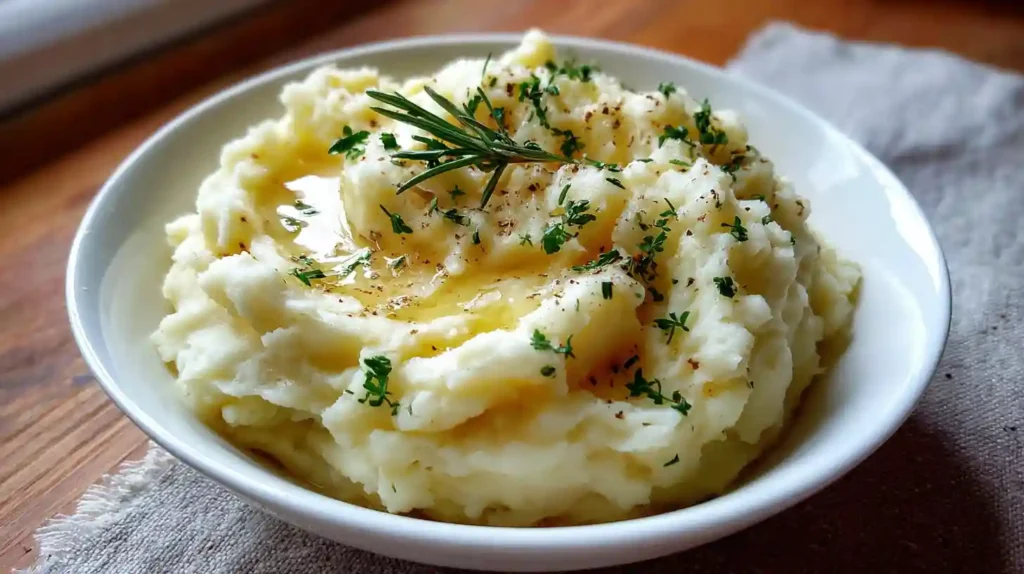
- Herbaceous twist: Stir in a mix of parsley, thyme, or rosemary for an earthy upgrade.
- Sour cream & onion: Swap some milk for sour cream and add a pinch of onion powder.
- Truffle mash: A few drops of truffle oil — sparingly — turns this into a luxe side.
PSA: These upgrades aren’t just for fun. They’re also great if your main dish is simple and you want the potatoes to be the star.
Can I make mashed potatoes ahead of time?
Answer: Definitely. Make them a few hours ahead and keep warm in a sous vide bag (140°F) or slow cooker. Stir in a splash of warm milk just before serving to revive the texture.
What to Serve With Mashed Potatoes
Mashed potatoes are the sidekick that steals the show — a creamy, comforting canvas that plays well with just about anything. But some pairings? They’re the stuff of dinner dreams.
Classic Comfort Combos
- Swedish meatballs – Savory, saucy, and made for scooping over a bed of creamy mash.
- Steak – A juicy ribeye or sirloin next to buttery mashed potatoes is peak indulgence.
- Roast chicken or turkey – Mashed potatoes soak up drippings and gravy like no other.
- Meatloaf – Old-school, in the best way. Add green beans or peas to complete the trio.
Great for Holidays — or Weeknights
On the holiday table, mashed potatoes are non-negotiable. But don’t save them just for Thanksgiving or Christmas. They’re fast enough to make on a Tuesday night when takeout feels too cold and rice feels too boring.
Vegetarian Pairings
Mashed potatoes don’t need meat to shine:
- Mushroom gravy – Rich, umami-packed, and 100% vegetarian.
- Lentil loaf – A hearty plant-based main that loves a creamy sidekick.
- Stuffed bell peppers – Serve with mash instead of rice for a cozy twist.
Tip: If your main dish is creamy or heavy, keep the mash basic. If the main is lean or light, that’s your chance to go bold try the cheddar-chive or roasted garlic variations.
Can I serve mashed potatoes cold?
Answer: Technically yes, but texture and flavor suffer. Mashed potatoes are best served warm — if making ahead, gently reheat with a splash of milk on the stove or in the microwave at half power.
FAQs
Can I use red potatoes or other types?
Yes, but expect a different texture. Red potatoes are waxier and hold their shape more — which can make them great for rustic mash with the skins left on. But for ultra-smooth, creamy mashed potatoes, Russets or Yukon Golds are the gold standard.
Why did my mashed potatoes turn out gluey?
It’s almost always overmixing. Using a food processor or hand mixer releases too much starch and turns your mash into paste. To avoid that, use a ricer or mash gently by hand — and always fold in butter and milk instead of stirring aggressively.
Can I make mashed potatoes ahead of time?
Absolutely. You can prep them several hours (or even a day) in advance. To reheat, warm gently on the stove with a splash of milk, or use a slow cooker on the “warm” setting. For perfectionists: sous vide at 140°F in a sealed bag works beautifully.
Can I freeze leftover mashed potatoes?
You can, but the texture will change slightly. Thaw overnight in the fridge, then reheat slowly with added milk or butter. Stir gently to bring them back to life — they won’t be quite as fluffy, but still comforting.
How do I make them dairy-free?
Swap butter for a plant-based version (like Miyoko’s or Earth Balance), and use unsweetened almond, oat, or soy milk. Add a pinch more salt and maybe a dash of olive oil to balance the flavor.
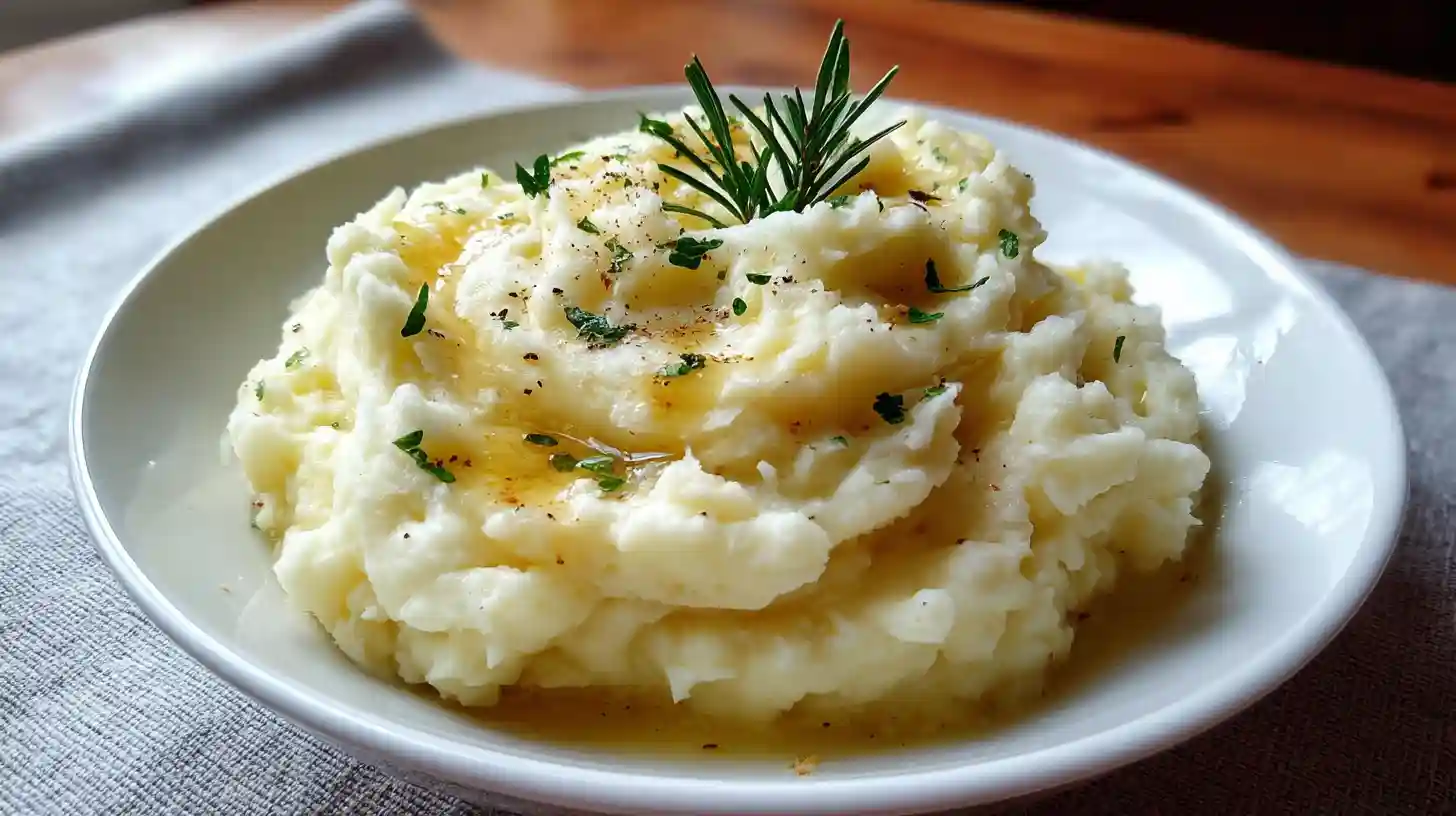

The Creamiest Mashed Potatoes
Ingredients
Equipment
Method
- Peel the potatoes and cut into 1-inch cubes. Place in a pot and cover with cold water. Add salt.
- Bring to a boil, then reduce heat and simmer for 15–20 minutes, or until fork-tender.
- Drain potatoes thoroughly and pass through a ricer into a large bowl.
- Add butter on top of hot potatoes and let sit for a few seconds to melt. Gently fold to incorporate.
- Pour in milk gradually while folding gently until desired creaminess is reached. Season with black pepper to taste and serve warm.
Notes
Looking for more cooking and baking inspiration? Browse our Pinterest boards or join the conversation with us on Facebook.
Conclusion
There’s something grounding about a bowl of mashed potatoes a kind of quiet joy that doesn’t need to announce itself. It just shows up, smooth and buttery, ready to make anything it touches taste more like home.
Now you’ve got the techniques, the tips, and a few variations to play with. Whether it’s your first time making mashed potatoes from scratch or you’ve been doing it for years, this version is designed to be reliable, flexible, and above all deeply satisfying.
Try it once. Tweak it next time. Make it your own.
And hey if these mashed potatoes made it to your table, I’d love to hear how they turned out. Drop a comment, share a photo, or bookmark this for the next holiday scramble.
Because let’s face it once you’ve nailed the perfect mashed potatoes, you’re basically halfway to comfort food greatness.